
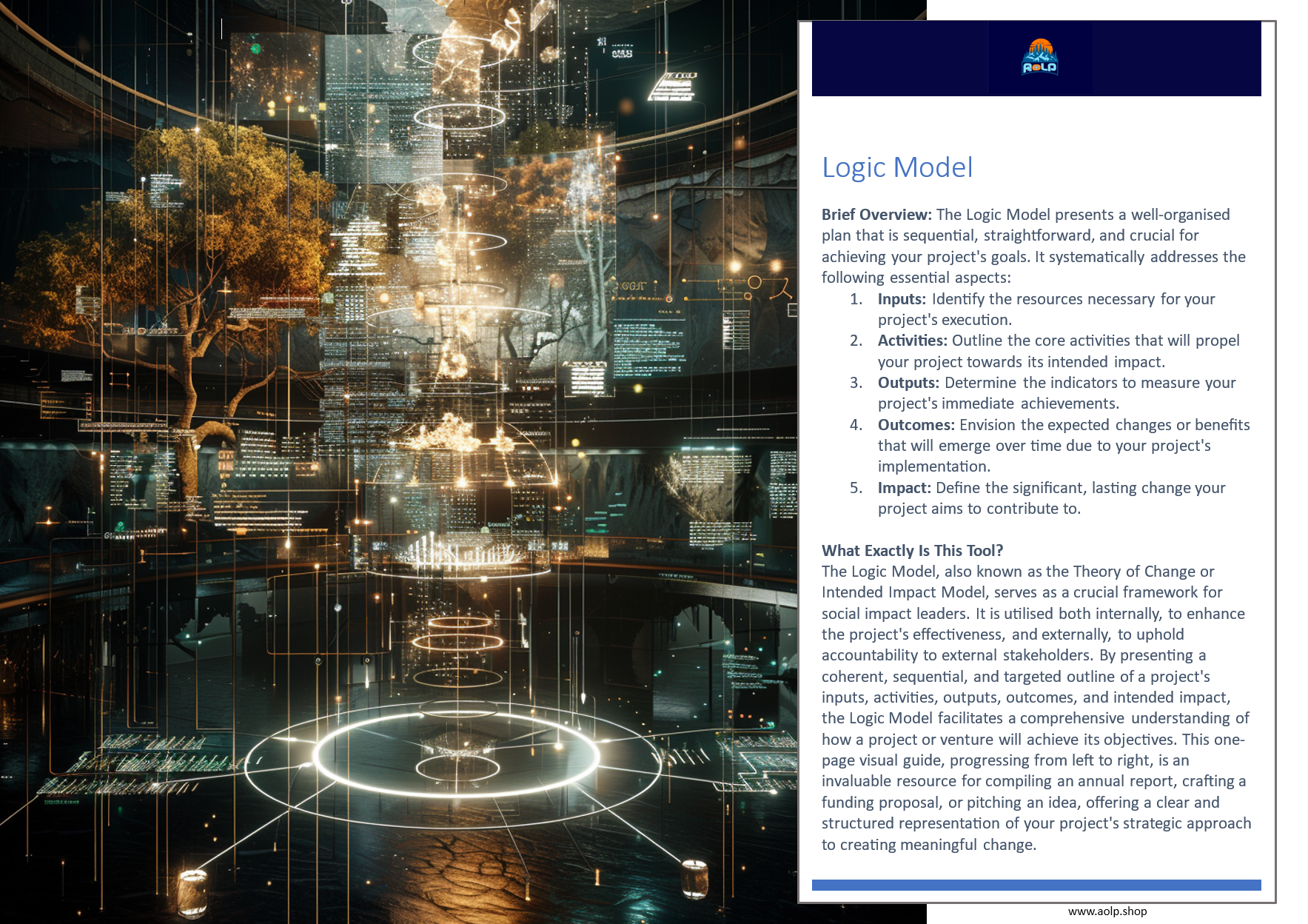
The Academy of Life Planning (AoLP) uses a special plan called the GAME Plan to help make financial planning better and more meaningful for everyone. Part of this plan involves something we call the AoLP Logic Model. This model is like a map that shows us how to use our resources wisely to achieve great things for ourselves and the world around us.
Download the AoLP Logic Model: The AoLP Logic Model.
What is the AoLP Logic Model?
Think of the AoLP Logic Model as a simple tool that helps us connect what we have (like time, money, and skills) with the good things we want to do (our actions) and the positive changes we want to see in the world (our goals). It’s all about making sure we’re not just successful in business, but also in making the world a better place for everyone.
Making a Bigger Impact Together
By using this model, we’re able to measure the good we do in a way that goes beyond just making money. It’s about valuing things like happiness, health, and a clean environment. This approach helps us be clear about our goals and make sure we’re always moving in the right direction.
How It Fits into the Bigger Picture
The AoLP Logic Model is a key part of our GAME Plan. It helps us focus on making a real difference through our work. When we talk about “Profit” in our plan, we’re not just thinking about money. We’re thinking about all the ways we can enrich lives and protect our planet.
Join Us on This Journey
The AoLP Logic Model isn’t just a tool; it’s a reflection of our commitment to doing good in the world. It’s part of how we’re trying to show that financial planning can be a force for positive change. By following this model, we invite everyone to join us in creating a future where success means more than just wealth—it means happiness, health, and harmony for all.
How to use it
To effectively use the AoLP Logic Model, follow these simplified instructions:
- Identify Inputs: Start by listing all the resources available to you, such as time, money, skills, and any other assets you can leverage.
- Define Activities: Outline the specific actions or initiatives you will undertake using your inputs. This could include workshops, counselling sessions, or community projects.
- Set Outputs: Specify the direct results you expect from your activities. Outputs should be tangible and measurable, such as the number of workshops conducted or people reached.
- Determine Outcomes: Identify the short-term and long-term changes or benefits that result from your activities. Outcomes should reflect the impact on your target audience or community, like improved financial literacy or well-being.
- Measure Impact: Evaluate the broader effects of your outcomes. This involves assessing the social, environmental, or economic changes that occur as a result of your work, aiming for a positive impact on society.
- Review and Adjust: Regularly review the effectiveness of your model. Adjust your inputs, activities, outputs, or outcomes as needed to ensure you are making the desired impact.
These steps provide a framework for planning and assessing your initiatives, ensuring they are aligned with our goals of creating sustainable, positive change in the world of financial planning.
 Academy of Life Planning