
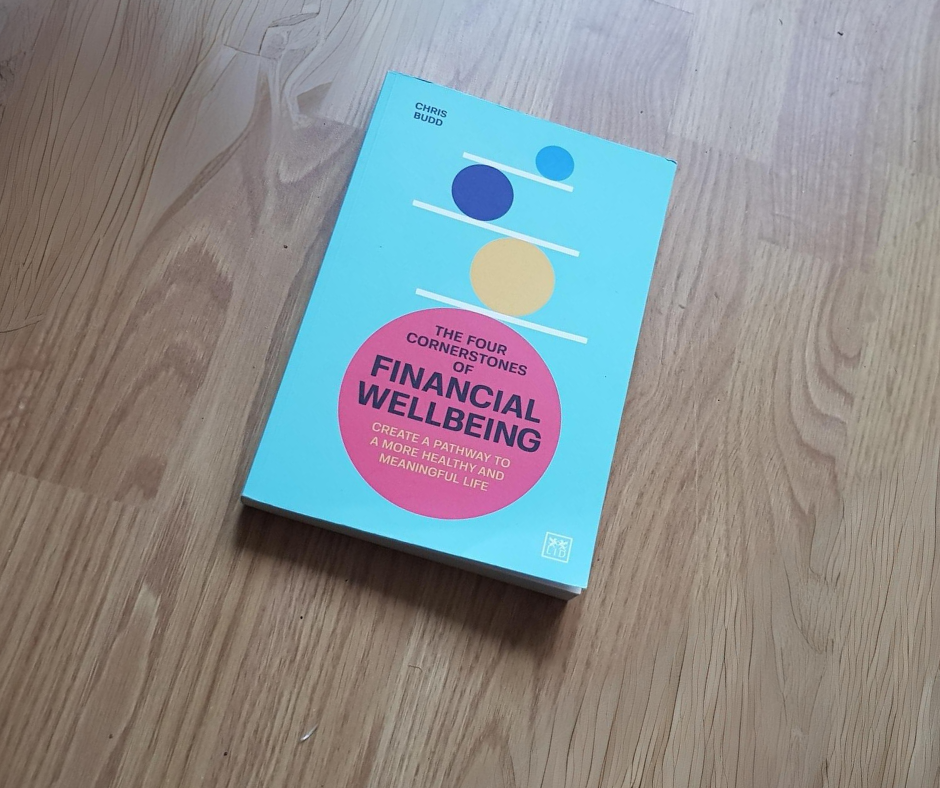
In the realm of financial planning and personal wealth management, Chris Budd’s book, “The Four Cornerstones of Financial Wellbeing,” has emerged as a noteworthy contribution. While the book garners acclaim for its structured approach to financial stability, a deeper analysis reveals significant areas where it may fall short, particularly in the holistic integration of financial strategies with the broader spectrum of human wellbeing.
The Conceptual Framework: Strengths and Limitations
Budd structures his financial advice around four key cornerstones: Control, Capacity, Confidence, and Purpose. This framework is undeniably effective in providing readers with a tangible strategy to navigate their financial journey. The emphasis on ‘Control’ resonates with the need for individuals to take charge of their financial destiny, while ‘Capacity’ and ‘Confidence’ offer practical advice on managing and growing wealth.
However, the book’s treatment of ‘Purpose’ under social wellbeing, rather than as an aspect of spiritual wellbeing, signals a missed opportunity. In an era where financial objectives are increasingly intertwined with personal values and ethical considerations, the book’s narrow interpretation of ‘Purpose’ as a purely social or ego-driven entity is a point of contention. This approach potentially overlooks the profound implications of spiritual fulfilment and the role it plays in shaping an individual’s financial decisions and sense of contentment.
Target Audience: A Selective Focus
One of the notable aspects of Budd’s book is its apparent target audience. The advice provided primarily benefits those who are already financially comfortable, focusing on the management of existing wealth rather than the generation of new income streams or effective debt management strategies. This orientation may inadvertently exclude a significant portion of the population who are grappling with more fundamental financial challenges, such as debt reduction or income generation.
Moreover, Budd’s perspective on financial advisers – that they should be the ones managing clients’ finances – raises questions about his commitment to fostering financial independence and literacy. This stance seemingly contradicts the growing movement towards empowering individuals to take control of their financial planning, a crucial aspect in the journey towards financial wellbeing.
A Skewed Emphasis on Intellectual and Emotional Wellbeing
Budd’s book places a strong emphasis on intellectual and emotional responses to financial planning. While this focus is undoubtedly important, it tends to overshadow the roles of instinct and intuition, which are equally vital in making sound financial decisions. The book’s approach leans towards rational analysis and emotional stability, but it somewhat neglects the gut feelings and inner voices that often guide individuals in their financial choices.
Furthermore, the book’s treatment of holistic wellbeing appears limited. The balance of mind, body, heart, and spirit is crucial for overall wellbeing, yet Budd’s framework predominantly addresses the mind and, to a lesser extent, the heart. This oversight can lead to a one-dimensional approach to financial planning, where the spiritual and instinctual aspects of human nature are undervalued.
Self-Actualization Over Self-Transcendence
A critical point of critique in Budd’s book is its emphasis on self-actualization, often at the expense of self-transcendence. The pursuit of personal goals and achievements is certainly a worthy endeavour. However, in the context of financial wellbeing, an overemphasis on self-actualization can lead to a narrow view of success, one that is predominantly measured in material terms.
The concept of self-transcendence, which involves surpassing personal needs and contributing to the greater good, receives little attention in Budd’s framework. This exclusion is particularly noteworthy in today’s world, where many individuals seek to align their financial goals with broader social, environmental, and ethical objectives.
Concluding Thoughts
In summary, Chris Budd’s “The Four Cornerstones of Financial Wellbeing” provides a structured and thoughtful approach to financial planning. It offers valuable insights for those looking to manage and grow their existing wealth. However, the book’s limited scope in addressing holistic financial wellbeing, its skewed focus towards a particular demographic, and the omission of critical aspects such as spiritual wellbeing and self-transcendence, limit its applicability in today’s diverse and ethically conscious financial landscape.
As the financial world evolves, with a growing emphasis on inclusive and holistic approaches, it becomes increasingly important for financial advice to encompass all facets of wellbeing. Budd’s book, while insightful in many respects, might benefit from a broader perspective that integrates financial stability with the complete spectrum of human experience – mind, body, heart, and spirit.
In conclusion, while “The Four Cornerstones of Financial Wellbeing” stands as a useful guide for a certain segment of the population, it falls short of addressing the nuanced and multifaceted needs of a more diverse audience seeking comprehensive financial enlightenment and wellbeing. The quest for a truly holistic approach to financial planning continues, one that balances financial success with social, environmental, and spiritual fulfilment.
 Academy of Life Planning