

Twenty years ago, I founded the UK’s award-winning and market-leading workplace marketing operation, Abbey @ Work, was the keynote speaker at the Institute of Pension and Payroll Managers AGM, wrote columns in the EBC trade press, and chaired Employee Benefits Magazine sessions at their annual events. I more recently founded an efficient and market-leading auto-enrollment consulting firm, Workplace Pensions Direct. I understand worksite marketing in an industrialised world where there is a race to the bottom on cost, and humans are treated as resources, and motivation is to be maximised per pound spend.
But as Seth Godin says in “The Song of Significance”, all that has changed. In a post-COVID world, workers want safety (and survival and security). But most of all, they want significance.
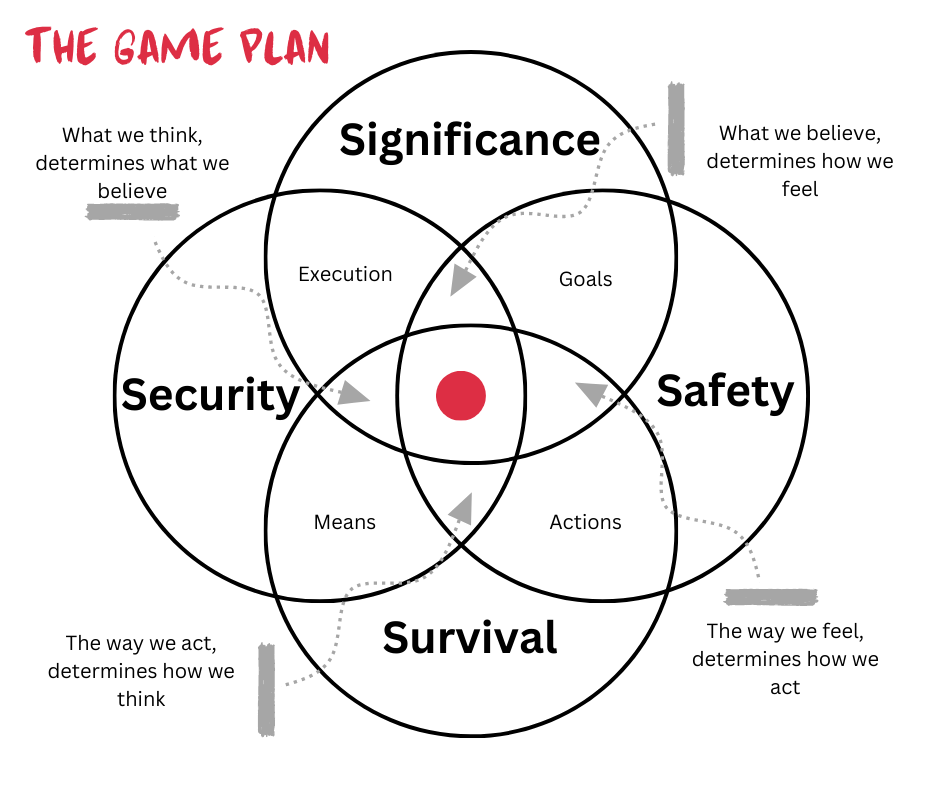
For me, significance is delivered with a values-led and purpose-driven plan that takes care of worker well-being (mind, body, heart, and spirit). But, most importantly, it gives the worker the opportunity to serve others. To use what they are good at and love to do to make the world a better place and receive a sustainable livelihood. Most importantly, they should not die with that gift still in them. And to feel they have made the world a better place for having lived.
But employers with an industrial mindset close ticket offices on the railways and remove cleaners (who were really caretakers for waiting patients) from hospital corridors. As they measure productivity to the nth degree and minimise payroll costs.
The results: strikes. A societal-wide rebellion.
We need to give every employee a Game Plan for life. We need to work out individually for each worker what their comfort zone is—below which lies poverty and above which is a life of excess. We can do this.
1) Imagine if we applied the “Threshold Hypothesis for Consumption and Wellbeing“ in the workplace:
- What it Means: This concept suggests that there’s an optimal range of consumption that maximises well-being. Below this range lies poverty, and above it lies excess.
- How to Implement: Integrate this concept into your proposition by adding a feature that helps users identify their own “comfort zone” of consumption. This could be based on a variety of metrics, including income, expenses, and personal values.
2) Seneca’s Philosophy on Wellbeing and Luxury:
- What it Means: The Roman Stoic philosopher Seneca believed that everything needed for our well-being is readily available, while luxury often leads to misery.
- How to Implement: Incorporate Stoic philosophies into your planning tools and educational content. For instance, you could offer a Stoicism-based course that helps users distinguish between needs and wants, focusing on achieving a life of “enough” rather than one of excess.
3) Merging with Kokoro:
- What it Means: The aim is to live a life that is not only financially secure but also rich in Kokoro—heart, spirit, mind, and self.
- How to Implement: Create a holistic planning model that combines financial metrics with emotional, intellectual, and spiritual goals. This could be a “Kokoro Score,” for instance, that measures how well a user balances these four elements.
Aligning with “Planning My Life” Values
- Empowerment: Empower users to find their comfort zone and live a life of “enough,” aligning with Seneca’s philosophy and the threshold hypothesis.
- Integrity: Uphold the value of living within one’s means and focusing on genuine well-being rather than material excess.
- Innovation: Use innovative AI algorithms to help users find their optimal consumption range and achieve a balanced life.
- Community: Foster a community that supports each other in living a balanced, fulfilling life, sharing tips and insights on achieving this.
- Personal Growth: Offer resources that help users grow financially, emotionally, and spiritually, aligning with the concept of Kokoro.
- Decentralisation: Continue to place the power in the hands of the individual, allowing them to define their own metrics for success and well-being.
Integrating these concepts, “Planning My Life” can offer a holistic approach to financial planning and personal growth. It’s not just about having enough money but about having “enough” in every aspect of life to live your Kokoro.
When we deliver this in the workplace, the result a firm of significance.
We shouldn’t have a society where nurses visit food banks. Nor should hospital consultants on six-figure salaries be striking over pay awards.
In our workplace wellbeing programmes, we need game plans for survival, safety, security, and significance.
That’s what we can deliver at Planning My Life.
 Academy of Life Planning